
Visibility and Women’s Rights: A Conversation with Oumayma Izm


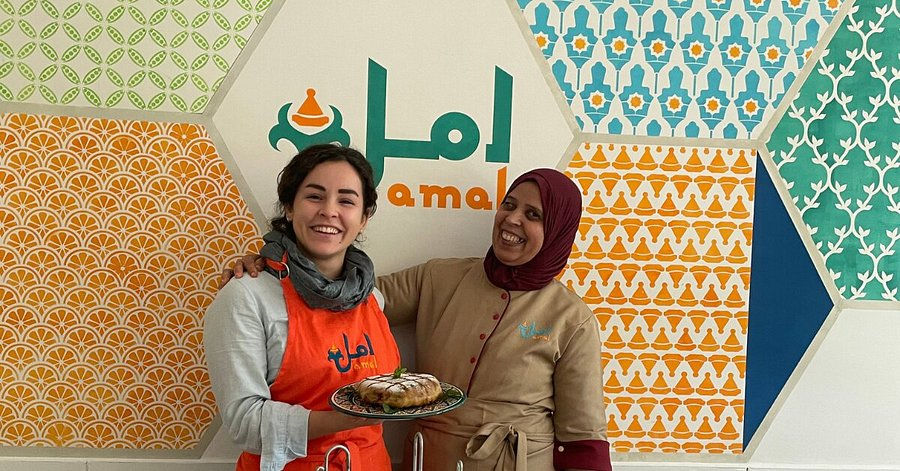
In Morocco, I sat down with Oumayma Izm of the Amal Center for Women and talked about women, tradition, and what it actually looks like to navigate change from inside a culture rather than outside of it.
The Amal Center in Marrakech works with women facing real economic and social barriers, offering culinary training, education, and pathways to employment. But as Oumayma talked through the work, it became clear that the center is about more than skills or jobs. It creates visibility. It offers women a place to be recognized for what they know, what they can do, and who they already are, often for the first time within a formal system.
That idea kept coming up as we talked. When people are missing from the stories institutions tell about themselves, their needs are easier to miss too. Programs get designed with partial information. Policies move forward without a clear picture of the lives they’re meant to support. Visibility isn’t abstract. It shapes whose experiences inform decisions and whose voices carry weight when resources and opportunities are on the table.
I’ve seen this same tension show up at a global level. Organizations like UN Women consistently point to the gap between policy conversations and lived experience, especially when women are absent from the spaces where decisions are made. When women are present, policies tend to reflect reality more closely. They respond to actual conditions instead of assumptions. What Amal does on a local level mirrors that same principle in practice.
There’s a leadership lesson here that extends beyond any one organization. Advocacy isn’t only about putting the right ideas into the world. It’s about creating environments where people can see themselves inside the work. When institutions take visibility seriously, strategy starts to shift. Accountability sharpens. Impact becomes more durable because it’s actualized in real experience, not distance.
After our conversation, I kept thinking about how often policy work feels removed from daily life. Decisions that shape opportunity are usually made far from the people living with their outcomes. Leaders like Oumayma help close that gap. When organizations treat community leaders as partners in learning rather than just implementers, policy becomes more responsive, more human, and more likely to last.
Conversations like this remind me that the future of women’s rights isn’t shaped only in conference rooms or policy briefs. It’s shaped in everyday spaces where women are seen, listened to, and taken seriously, long before their experiences ever make it into formal systems.
If you’d like to learn more about or support the Amal Center’s work, you can find more about their programs here.
To explore global efforts advancing women’s rights and visibility, you can learn more about UN Women here.


Comments